.png?auto=format&compress=true&w=3840)
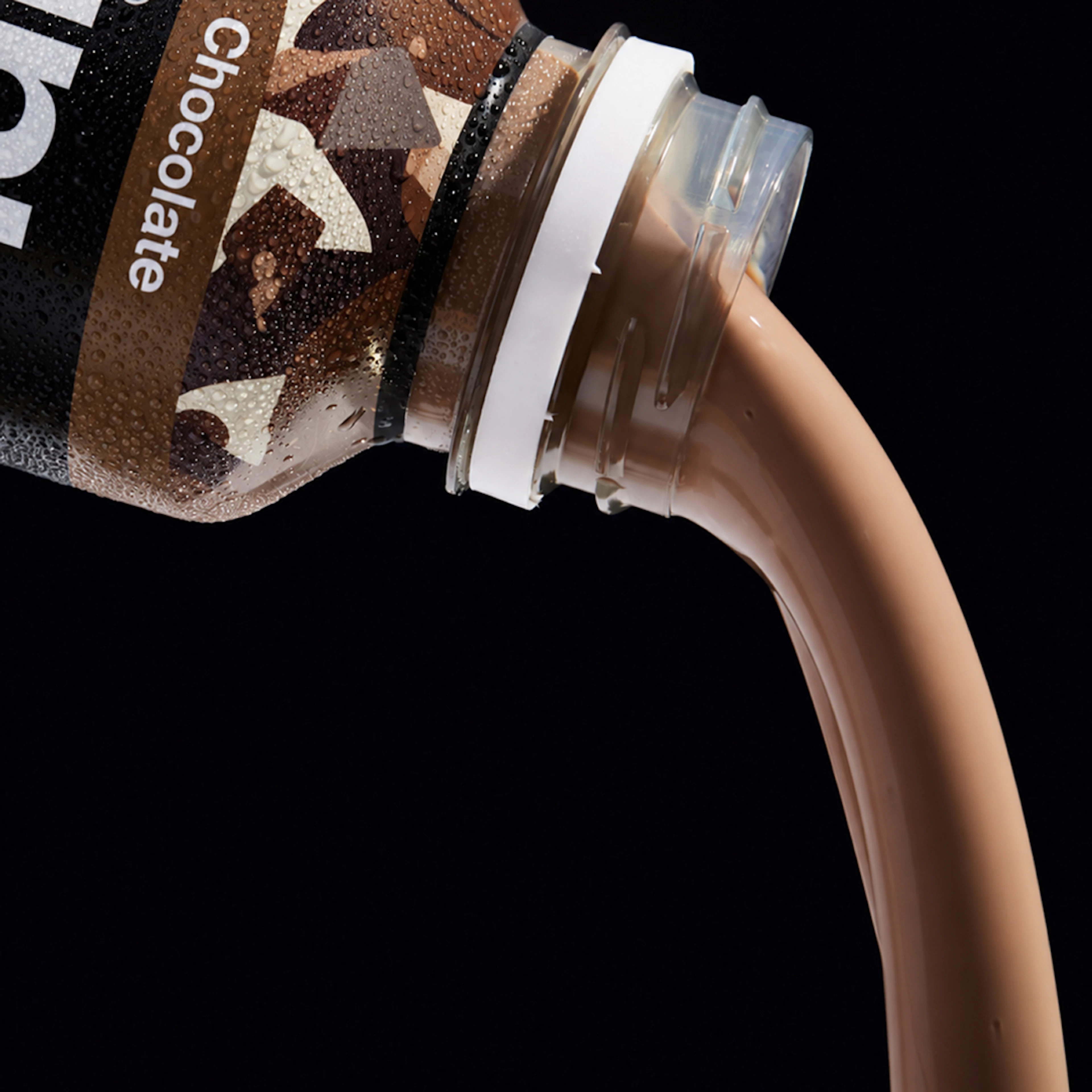
Black Edition Ready-to-drink
High-protein meal shakes
35g protein
400 kcal per bottle

Four weeks is not enough time to transform your body. It is, however, enough time to meaningfully change how it feels, how it moves, and what it can do — and to build the habits that make longer-term progress possible. The problem with most four-week programmes is that they're built around restriction: cut this, eliminate that, white-knuckle your way through the month. That approach works for approximately as long as willpower holds, which for most people is not very long.
What actually works is adding things rather than removing them — more movement, more protein, more sleep, more consistency — while making small, targeted adjustments to the things that matter most. Here's how to do it.
TL;DR: Building a stronger body in four weeks is about consistent strength training, adequate protein, and better sleep — not extreme restriction. Small, sustainable additions compound quickly. You don't need to overhaul your diet or your life to see real results.
Before setting expectations, it's worth being precise about what four weeks of focused effort can realistically deliver. Significant muscle mass takes months to accumulate — research consistently shows that even with optimal training and nutrition, most people gain between 0.5 and 1 kilogram of muscle per month under ideal conditions. Four weeks won't produce the kind of visible transformation that fitness marketing promises.
What it can produce: measurably improved strength, better movement patterns, reduced fatigue during daily activity, improved body composition (particularly if combined with modest dietary changes), and — perhaps most importantly — a sustainable routine that extends beyond the initial four weeks. These are less photogenic outcomes than a dramatic before-and-after, but they're real and they compound.
Three resistance training sessions per week is the minimum effective dose for building strength as a beginner or returning exerciser, and it's sustainable alongside a normal life. Each session should target all major muscle groups — legs, back, chest, shoulders, and arms — either through full-body workouts or an upper/lower split.
Compound movements form the foundation: squats, deadlifts, rows, presses, and lunges. These recruit multiple muscle groups simultaneously, produce the most meaningful strength adaptations, and deliver the best return on time invested. Isolation exercises — bicep curls, tricep extensions — are fine additions but shouldn't dominate sessions.
Progressive overload is the mechanism by which muscles grow stronger. Each week, the training stimulus should increase slightly — either more weight, more repetitions, or less rest between sets. Without progression, adaptation stalls. Even small increments matter: adding 2.5 kilograms to a lift over four weeks represents meaningful progress.
Rest days are not lost days. Muscle repair and adaptation happen during recovery, not during training. Two rest days between sessions — or at minimum one — is the appropriate structure. Light movement on rest days (walking, stretching, yoga) supports recovery without adding meaningful stress.
Sleep is the most undervalued recovery tool available and costs nothing. Research published in the journal Sleep and replicated across multiple studies links poor sleep to reduced muscle protein synthesis, elevated cortisol, impaired glucose regulation, and increased appetite — all of which work against the goal of a stronger body. Seven to nine hours per night is the target for most adults.
Muscle is built from protein. Without sufficient dietary protein, resistance training produces far less adaptation — the training stimulus is there, but the raw material for repair and growth isn't. The current scientific consensus, reflected in guidelines from the British Nutrition Foundation and the International Society of Sports Nutrition, recommends 1.6 to 2.2 grams of protein per kilogram of body weight per day for people engaged in regular resistance training. For a 70-kilogram person, that's roughly 112 to 154 grams daily.
This doesn't require protein shakes or specialist foods. Chicken, fish, eggs, dairy, legumes, tofu, and tempeh all contribute meaningfully. The practical challenge for most people is distribution: spreading protein across three to four meals rather than concentrating it in a single large serving improves muscle protein synthesis throughout the day.
Carbohydrates are not the enemy of a stronger body — they're the primary fuel source for resistance training. Eliminating or severely restricting carbohydrates impairs performance in the gym and recovery afterwards. The quality and timing of carbohydrates matters more than the quantity: whole grains, starchy vegetables, and legumes support sustained energy and provide fibre that ultra-processed alternatives don't.
Dietary fat is equally essential — it supports hormone production, joint health, and the absorption of fat-soluble vitamins. Restricting fat below about 20% of total calories can impair testosterone production, which has direct consequences for muscle development.
The foods worth genuinely reducing — not eliminating — are those that displace nutritious options without contributing much: heavily processed snacks, alcohol in excess, and high-sugar drinks that add calories without satiety or micronutrients. This is a "less of" rather than a "none of" adjustment for most people, which is considerably more sustainable.
If there's a single change with the highest leverage for most people, it's eating more protein at breakfast. Most people consume the majority of their daily protein at dinner and very little at breakfast. Shifting a meaningful portion of protein intake earlier — eggs, Greek yoghurt, cottage cheese, smoked salmon — supports muscle protein synthesis across a longer window of the day and tends to reduce mid-morning hunger and the snacking that follows.
Week 1 will likely feel harder than expected. New movement patterns, unfamiliar muscle soreness (delayed onset muscle soreness, or DOMS, typically peaks 24 to 48 hours after a session), and the adjustment of eating more protein can all feel disruptive. This is normal. The goal in week one is simply to complete the sessions and establish the routine.
Week 2 is where most people start to feel the early benefits of consistency. Movement patterns become more familiar, DOMS reduces as muscles adapt, and the routine starts to feel less effortful. Small weight increases should be possible on most exercises.
Week 3 typically brings the clearest sense of progress. Lifts feel more controlled, energy during sessions improves, and the dietary habits from weeks one and two start to feel less like active effort.
Week 4 is about consolidation and setting up what comes next. The work done in weeks one to three has laid a foundation — the adaptation from these four weeks will continue to manifest over the following weeks even if training pauses briefly. Use week four to identify what worked, what didn't, and what a sustainable programme looks like beyond the initial month.
Strength is built in sessions, but it's sustained by systems. The four-week period is most valuable if it's used to establish routines that persist beyond it: a consistent training schedule, a loose framework for protein intake, and a sleep routine that supports recovery. None of these need to be perfect. The research on habit formation is clear that consistency beats intensity — showing up reliably for a moderate programme outperforms sporadic adherence to an extreme one every time.
The goal isn't a four-week transformation. It's building the version of your routine that you'll still be doing in four months.
How much muscle can I realistically build in four weeks? Under optimal conditions — consistent training, adequate protein, good sleep — most people can build between 0.5 and 1 kilogram of lean muscle in a month. Beginners often see faster early gains because their nervous systems adapt quickly to new movement patterns. The more meaningful gains in four weeks tend to be strength and movement quality rather than visible size changes.
Do I need to go to a gym, or can I train at home? Both work, though a gym provides easier access to progressive overload (heavier weights over time). At home, resistance bands, dumbbells, and bodyweight progressions (moving from standard press-ups to decline or archer variations, for instance) can replicate the same stimulus. The environment matters less than the consistency.
What if I miss a session? Pick up where you left off. Missing one session in four weeks has no meaningful impact on results. Missing sessions consistently does. The framework is a guide, not a contract.
How much protein is too much? For healthy adults without pre-existing kidney conditions, intakes up to 2.2 grams per kilogram of body weight per day are well-tolerated and supported by research. Significantly higher intakes — above 3 grams per kilogram — are unlikely to produce additional muscle-building benefit and simply represent excess calories. If you have kidney disease or other relevant health conditions, speak to a healthcare professional before significantly increasing protein intake.
Can I still drink alcohol during the four weeks? Moderate alcohol consumption is not incompatible with building strength, but heavy or frequent drinking impairs muscle protein synthesis, disrupts sleep quality, and adds calories without nutritional value. Keeping intake moderate — and ideally avoiding alcohol on training days and the nights before sessions — is a reasonable practical approach.








Sign up to save £10 on your first order over £60 and be the first to hear about new products, exclusive offers, and more.