.png?auto=format&compress=true&w=3840)
Black Edition Ready-to-drink
High-protein meal shakes
35g protein
400 kcal per bottle
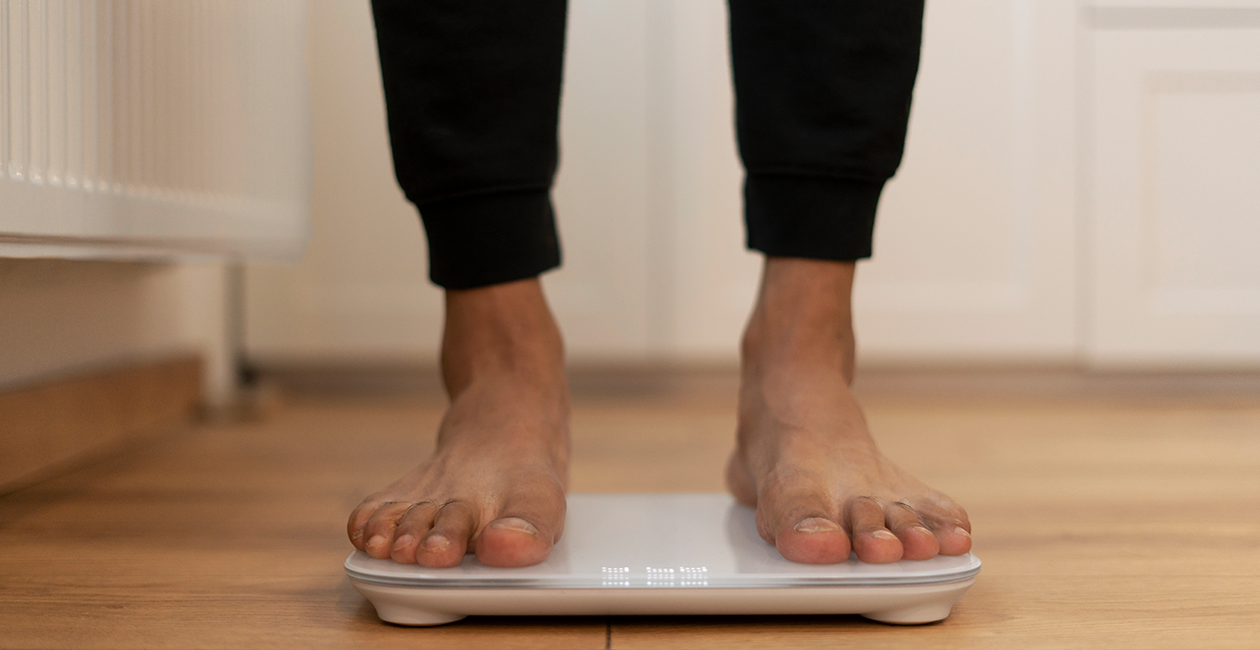
Step on a scale and you get one number. That number tells you how much gravity is pulling on your body at that moment — your bones, your organs, your muscle, your fat, your water, the breakfast you just ate. It tells you almost nothing about your body composition, your health, or whether what you're doing is actually working.
The conflation of weight loss and fat loss is one of the most persistent sources of frustration in fitness. People do everything right — train consistently, eat well, sleep adequately — and feel defeated when the scale doesn't move. Understanding the distinction doesn't just reframe the goal; it changes the entire approach.
TL;DR: Weight loss refers to a reduction in total body mass, which can include muscle, water, and fat. Fat loss specifically targets adipose tissue while preserving lean mass. The two are not the same, and optimising for fat loss rather than weight loss produces better health outcomes, better body composition, and more sustainable results.
Body weight is the sum of everything: skeletal muscle, bone density, organ mass, blood volume, body fat, gut contents, and water. Of these, body fat is the component most associated with metabolic health risk — specifically visceral fat, the fat stored around the abdominal organs. Subcutaneous fat (the fat under the skin) is less metabolically dangerous, though still relevant to body composition.
The scale captures all of this indiscriminately. A litre of water weighs one kilogram, which is why body weight can fluctuate by two to three kilograms within a single day depending on hydration, food volume, and hormonal factors. A high-carbohydrate meal increases glycogen stores, and each gram of glycogen is stored with approximately three grams of water — meaning a large carbohydrate-rich meal can temporarily add one to two kilograms that has nothing to do with fat gain.
This isn't a flaw to work around; it's simply what the scale measures. The problem arises when scale weight becomes the sole metric of progress.
Muscle tissue is metabolically active. It burns calories at rest, supports insulin sensitivity, protects joints, and is one of the strongest predictors of long-term health outcomes — particularly in older age, where muscle loss (sarcopenia) is associated with increased frailty, falls, and mortality.
Muscle is also denser than fat. One kilogram of muscle occupies considerably less space than one kilogram of fat. This means it's entirely possible to lose several centimetres from your waist, fit into smaller clothes, and look visibly leaner while the scale shows little or no change — because fat has been lost and muscle has been gained simultaneously. This is sometimes called body recomposition, and it's most pronounced in people new to resistance training or returning after a break.
Crash dieting — severe caloric restriction without resistance training — typically produces rapid scale weight loss, but a significant proportion of that loss comes from muscle mass rather than fat. The result is a smaller version of roughly the same body composition, with a lower resting metabolic rate (because there's less muscle to maintain), making future weight management harder.
Fat loss requires expending more energy than you consume. A deficit of 300 to 500 calories per day is the range most consistently supported by research for fat loss while preserving muscle — large enough to produce meaningful progress, small enough to avoid the muscle loss and metabolic adaptation associated with severe restriction. More aggressive deficits may produce faster scale results but poorer body composition outcomes.
Protein is the most important dietary variable for preserving muscle during a caloric deficit. It provides the amino acids needed for muscle repair and maintenance, and has a higher thermic effect than fat or carbohydrates — meaning the body expends more energy digesting it. Research supports intakes of 1.6 to 2.4 grams per kilogram of body weight per day during periods of caloric restriction, towards the higher end of this range when the deficit is more aggressive.
Cardio burns calories; resistance training signals the body to preserve and build muscle. Both are valuable, but resistance training is the more important variable for body composition specifically. Even two sessions per week of full-body resistance training meaningfully reduces muscle loss during a caloric deficit compared to cardio alone or diet alone.
If fat loss is the goal, scale weight is a poor primary metric. More useful indicators include waist circumference, how clothes fit, performance in training (strength and endurance), and where possible, body composition measurements such as DEXA scans or skinfold measurements. Progress photos taken under consistent conditions are also more informative than daily weigh-ins.
Waist circumference is one of the most clinically meaningful measures of fat loss progress. Reductions in waist measurement correlate with reductions in visceral fat, which is the component most associated with metabolic disease risk. A waist circumference above 94cm in men and 80cm in women is associated with increased health risk according to World Health Organisation guidelines.
Resting heart rate tends to decrease with improved cardiovascular fitness and reduced body fat, making it a useful secondary indicator of progress.
Energy levels and sleep quality are both sensitive to body composition changes and dietary quality. Improvements here — feeling less fatigued, sleeping more soundly — are meaningful markers of metabolic health improving even when the scale is static.
Can you lose fat and gain muscle at the same time? Yes, though it's most pronounced in specific populations: people new to resistance training, those returning after a break, and those with higher levels of body fat. It becomes progressively harder to achieve simultaneously as training age increases and body fat decreases. For most experienced trainees, alternating periods of slight surplus (to support muscle gain) and modest deficit (to lose fat) produces better results than trying to do both simultaneously.
Why did I lose weight quickly at first and then stall? Early rapid weight loss on a new diet is predominantly water and glycogen rather than fat. As glycogen stores deplete, the associated water loss produces a fast initial drop on the scale. Once this stabilises, fat loss proceeds at a slower, steadier rate — which is normal and expected, not a plateau.
Is BMI a useful measure? BMI (body mass index) is a population-level screening tool, not an individual measure of health or body composition. It doesn't distinguish between fat mass and muscle mass, which means a muscular person can register as "overweight" by BMI while having excellent body composition, and a sedentary person with low muscle mass can register as "normal" while having a metabolically unhealthy body composition. Waist circumference and body composition measures are more informative for individuals.
How long does meaningful fat loss take? At a deficit of 300 to 500 calories per day, a realistic rate of fat loss is approximately 0.5 to 1 kilogram per week. Slower progress often reflects better muscle preservation. Sustainable fat loss is measured in months rather than weeks, and the habits that produce it are the same habits that maintain the result.








Sign up to save £10 on your first order over £60 and be the first to hear about new products, exclusive offers, and more.